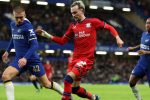
The two clubs are set to meet in MLS Cup for the first time, continuing an east-west rivalry that has been brewing since the early days of the league
LA Galaxy and New York Red Bulls have been here before.
But not in the way you might expect.
Back in 2011, MLS's playoff system was a confusing thing, a wildcard set up leading to all sorts of geographical confusion for one off games. And that is how New York – yes, New York – ended up hosting a [italics for emphasis]Conference playoff leg between the Red Bulls and Galaxy. It was proper knockout football. The Galaxy won 1-0, and after full time, Red Bulls midfielder and Mexican legend Rafa Marquez threw the ball at Landon Donovan. an innocent toss became a mass brawl, and two red cards were swiftly flashed. The Galaxy won the return leg with relative ease, and would go on to lift MLS Cup.
And the two sides haven't met in MLS playoffs since then. It's unfortunate, really, the two biggest sports markets in America, in nearly 30 years of MLS's existence, haven't met for a trophy. On Sunday, though, that will all change, a rivalry in the broader landscape of American sports rekindled with a trophy on the line.
"The New York-LA rivalry is always there, and we just haven't had those big moments that have driven this rivalry," current LA Galaxy head coach Greg Vanney said.
Get the MLS Season Pass today!Stream games nowGettyThe early days
MLS, remember, was a small league at first. There were only 10 founding clubs. Markets were targeted appropriately, with Los Angeles and New York both making the original cut (although the Red Bulls were dubbed the far cooler "MetroStars" before being rebranded by the soft drink conglomerate.)
"In the original days it was the MetroStars, with the anticipation of being a big franchise with some big names, and the Galaxy similarly," Vanney said.
At first, this rivalry was an LA thing. Although D.C. United won the first MLS Cup, the Galaxy made three of the first six finals (and lost in the final every time). The MetroStars, meanwhile, toiled. And in the clash between the two sides, LA had the upper hand. The Galaxy won 10 of the first 15 matchups, including five straight from March 1998-April 2000.
The playoffs were equally unkind to the New York side. Despite battering the Galaxy, 4-1, in the second of a best-of-three series in the 2001 postseason, they went on to lose in the third leg thanks to a Mauricio Cienfuegos Golden Goal.
Over the following years, the two sides went back and forth. A 5-0 New York home win in 2002 suggested that there could be room for revenge. But the Galaxy delivered when it matters, winning MLS Cup in 2002 and 2005. Still, regular season matchups favored New York, with the Galaxy winning just two of 12 from 2002-2007.
AdvertisementUSA Today ImagesGalaxy go global
The first two games between the teams drew impressive crowds – but those were buoyant off the excitement of a new league. But after that, peer over the attendance numbers of the next 26 iterations of the contest, and the highest mark tallies a tepid 22,274. A playoff game only brought in 12,000. These games, remember, were played in NFL Stadiums. There were a lot of empty seats under the searing summer sun. And then, the Galaxy changed everything.
Flash forward to 2007 and a remarkable 66,237 showed up for a midseason slog contest, with league leading, rebranded Red Bulls hosting the Galaxy at Giants Stadium on Aug. 18, 2007. The occasion? David Beckham's first MLS start. Time has forgotten, largely, that it was perhaps one of the more gripping games in MLS regular season history. The Red Bulls won it 5-4, a young Jozy Altidore bagging a brace. Beckham, for his part, assisted twice. And so this fixture proved to be the first forum for the new-found global relevance of MLS.
The Galaxy were at the forefront of it all. Beckham may have been the major addition, but they also had Landon Donovan, the most recognizable face in the USMNT setup. Robbie Keane, Steven Gerrard, Giovani Dos Santos and Zlatan Ibrahimovic would all follow. The formula brought about immense success in the early 2010s, LA winning three MLS Cups in four years from 2011-2014.
GettyThe Red Bulls get money
The Galaxy may have changed things for good, and kicked off a new era of the league. But the Red Bulls also emerged, thanks to a takeover in 2006 which rebranded the team from the MetroStars. It started with a massive injection of cash from the soft drink conglomerate. After all, who wouldn't want to play in New York?
The changes were swift, the franchise eager to return to its glory days. The first to arrive was Juan Pablo Angel. The Colombian striker was solid for seven years for Aston Villa, but saw his tenure tail off over the course of the 2006-07 campaign. At 32, he still had enough in his legs to make an impact at the top level. And he did just that, bagging 20 goals for the Red Bulls in their inaugural season under new ownership. They finished third in the Eastern Conference. The year after, they made MLS Cup.
And of course, the big stars would soon arrive. Thierry Henry was the headliner, but Rafa Marquez, Tim Cahill and Juninho all added some real credibility here. What started was a 15-year MLS playoff streak – the longest such run in league history. The Red Bulls arrival was a sign of intent from the soft drink maker, who would soon expand the Red Bull sporting network – which now includes five teams on three continents.
GettyTwo styles meet
But perhaps a more consistent theme here – across eras, geographical differences and star power – is the two contrasting styles of play. The Galaxy have shifted numerous times over the past 10 years, as coaches have come and gone. The Red Bulls, though, have found an identity and stuck to it – and now it might pay dividends.
"I would say that we played the whole regular season in a very good spot, and that we played with very good quality, that we showed our principles as well… So and now, when you start the playoffs, then the first game came against Columbus, and then you get the result, it meant something to the team to get the confidence, and have that self confidence," Red Bulls head coach Sandro Schwarz said.
This was all brought about by Jesse Marsch, who took over the club in 2015. The former USMNT manager was a graduate of the German school of gegenpressing, having learned under Ralf Rangnick and implemented a real intensity to the side. It's something that the Galaxy are weary of, even today.
"The vision that they have and the version of the Red Bulls, which is a really aggressive and dynamic way of doing things," Vanney said. "And having faced them many times in Toronto, you know, they're a team that is very disruptive, and they work hard, they sprint hard, they compete, and they get in your face."
The network has also facilitated transfers around the world. Marsch, who remodeled the club, earned a move to RB Salzburg, a rare move for Americans, and he would eventually be promoted to RB Leipzig in the Bundesliga as manager. New York stars such as Tyler Adams and Caden Clark followed. The big names have somewhat dried up in the past decade, though the team appears to be bringing back some of its old approach with the arrival of Forsberg – the Bundesliga's assist leader in 2017.